
LinkedIn Cold vs Warm Outreach: Which Strategy Works Best?
LinkedIn has become the go-to platform for B2B lead generation, but choosing between cold and warm outreach can make or break your success. Understanding when to use each strategy—and how to execute them effectively—is crucial for building a pipeline that converts.
In this comprehensive guide, we'll break down the differences between cold and warm outreach on LinkedIn, analyze their respective strengths, and show you how to optimize both approaches for maximum impact.
What is Cold Outreach on LinkedIn?
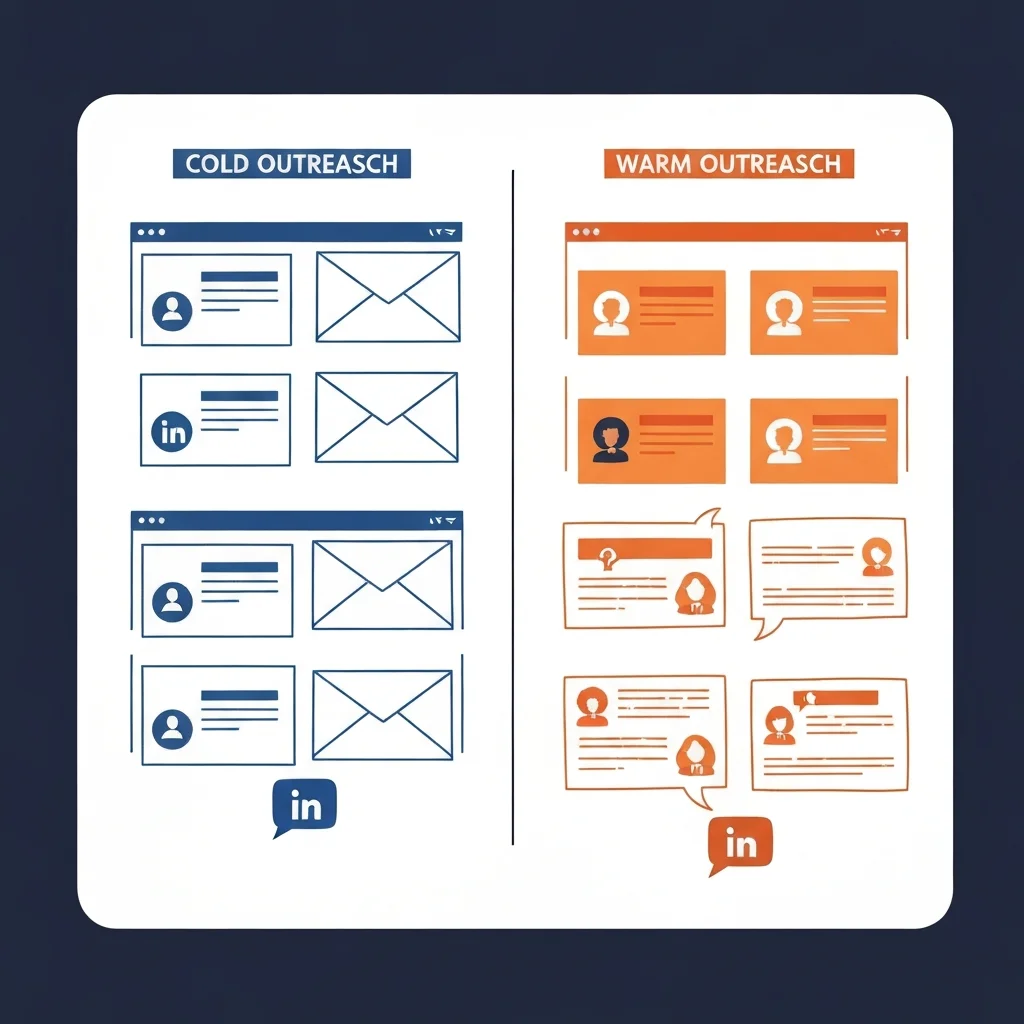
Cold outreach refers to reaching out to prospects who have no prior relationship with you or your brand. These are people you've never interacted with, who may not know your company exists, and who haven't shown explicit interest in your product or service.
Common cold outreach tactics include:
- Sending connection requests to targeted prospects
- Following up with personalized messages after connecting
- Engaging with prospects' content before reaching out
- Using InMail to bypass the connection requirement
Cold outreach is often necessary when you're entering new markets, targeting specific decision-makers, or building awareness in industries where your brand isn't yet established.
What is Warm Outreach on LinkedIn?
Warm outreach targets prospects who already have some familiarity with you or your brand. This could be through previous interactions, mutual connections, shared group memberships, or engagement with your content.
Warm outreach opportunities include:
- Following up with webinar attendees
- Reaching out to people who engaged with your posts
- Messaging prospects who visited your profile
- Connecting with referrals from existing clients
- Re-engaging dormant connections
The key advantage? These prospects already have a baseline level of trust, making them significantly more likely to respond positively.
Cold vs Warm Outreach: Key Differences
Response Rates
Warm outreach typically generates 3-5x higher response rates than cold outreach. When prospects recognize your name or have seen your content, they're more receptive to your message.
Average response rates:
- Cold outreach: 5-15%
- Warm outreach: 20-50%
Time to Conversion
Cold prospects require more nurturing before they're ready to buy. Warm prospects often move through the sales funnel faster because trust has already been established.
Typical conversion timeline:
- Cold prospects: 3-6 months
- Warm prospects: 1-3 months
Message Personalization
Cold outreach requires extensive research to personalize effectively. Warm outreach allows you to reference shared experiences or previous interactions, making personalization more natural and authentic.
Volume vs Quality Trade-off
Cold outreach enables you to reach a larger audience quickly. Warm outreach typically involves smaller volumes but higher-quality conversations and better conversion rates.
When to Use Cold Outreach
Cold outreach makes sense in several scenarios:
1. Breaking Into New Markets
When launching in a new industry or geography, you won't have existing relationships. Strategic cold outreach helps you establish initial connections and build brand awareness.
2. Targeting Specific Decision-Makers
Sometimes your ideal buyer persona is so specific that you need to proactively reach out rather than wait for them to discover you.
3. Scaling Rapidly
Cold outreach allows you to contact hundreds or thousands of prospects in a short timeframe, making it ideal for aggressive growth strategies.
4. Testing New Value Propositions
Cold outreach provides unbiased feedback on your messaging. If prospects with no prior context respond positively, you know your value proposition resonates.
When to Use Warm Outreach
Warm outreach should be your default strategy whenever possible:
1. Following Up on Content Engagement
When someone likes, comments, or shares your LinkedIn post, they've raised their hand. This is prime warm outreach territory.
2. Leveraging Event Participation
Webinar attendees, conference connections, and workshop participants are already familiar with your expertise. Follow up while you're top of mind.
3. Referrals and Introductions
When a mutual connection makes an introduction, the trust transfer makes warm outreach significantly more effective than cold contact.
4. Re-engaging Past Conversations
Dormant connections who previously showed interest but didn't convert are excellent warm outreach opportunities. Circumstances change, and timing matters.
Best Practices for LinkedIn Cold Outreach
1. Hyper-Personalize Your Approach
Generic messages kill cold outreach. Reference something specific about the prospect—a recent post, a shared interest, or a relevant challenge their company faces.
Poor example: "Hi [Name], I'd love to connect and discuss how we can help your business."
Strong example: "Hi [Name], I noticed your recent post about scaling outbound without burning out your SDR team. We've helped companies like [Similar Company] automate their LinkedIn workflows while maintaining personalization. Would love to share what's working."
2. Lead With Value, Not Your Product
Nobody wants to be sold to in the first message. Offer insights, relevant content, or observations that demonstrate your expertise.
3. Optimize Your Connection Request Message
LinkedIn's 300-character limit forces clarity. Use it wisely:
- Mention a specific commonality
- Reference their work or content
- Be clear about why you're connecting
- Skip the hard pitch
4. Follow Up Strategically
Most cold outreach requires 3-5 touchpoints before getting a response. Create a follow-up cadence that provides value at each step:
- Day 0: Connection request
- Day 3: Thank them for connecting + share relevant insight
- Day 7: Comment on their recent post
- Day 14: Send valuable content resource
- Day 21: Soft pitch or meeting request
5. Use Automation Tools Wisely
Tools like BeReach can automate repetitive tasks while maintaining personalization. The key is finding the balance between efficiency and authenticity.
Automate:
- Profile visits
- Connection requests (with personalized messages)
- Follow-up sequences
- Engagement tracking
Keep manual:
- Responses to replies
- Qualification conversations
- Meeting scheduling
- Relationship building
Best Practices for LinkedIn Warm Outreach
1. Strike While the Iron is Hot
When someone engages with your content or attends your event, reach out within 24-48 hours. The longer you wait, the colder the lead becomes.
2. Reference the Specific Touchpoint
Make it immediately clear why you're reaching out:
"Hi [Name], I saw you commented on my post about AI-powered prospecting yesterday. Your point about maintaining the human touch resonated with me..."
3. Segment by Engagement Level
Not all warm leads are equal. Prioritize:
Hot: Multiple engagements, profile visits, direct messages Warm: Single engagement, mutual connection introduced you Lukewarm: Shared group, attended same event months ago
Tailor your approach based on temperature.
4. Provide Next-Step Value
Don't assume engagement means readiness to buy. Offer a logical next step:
- Share a relevant case study
- Invite to an upcoming webinar
- Offer a free tool or template
- Schedule a no-pressure consultation
5. Track Engagement Signals
Use tools to monitor when warm prospects visit your profile, engage with content, or show buying signals. BeReach helps you track these signals automatically and trigger timely outreach.
Combining Cold and Warm Outreach for Maximum Impact
The most successful LinkedIn strategies blend both approaches:
The Warm-Up Sequence
- Cold touch: Send a targeted connection request
- Warm up: Engage with their content for 1-2 weeks
- Warm outreach: Reference your engagement in a follow-up message
This approach converts cold prospects into warm ones before asking for anything.
Content-First Strategy
- Build awareness: Post valuable content consistently
- Monitor engagement: Track who likes, comments, and shares
- Warm outreach: Message engaged prospects with relevant offers
Let your content do the heavy lifting, then follow up with people who raise their hands.
Event-Driven Approach
- Host events: Webinars, workshops, LinkedIn Lives
- Cold invite: Promote to targeted cold prospects
- Warm follow-up: Message attendees with next steps
Events transform cold prospects into warm leads at scale.
Measuring Success: Key Metrics
Track these metrics separately for cold and warm outreach:
Cold Outreach KPIs:
- Connection acceptance rate (target: 30-40%)
- Response rate to first message (target: 5-15%)
- Meeting booking rate (target: 2-5%)
- Cost per qualified lead
Warm Outreach KPIs:
- Response rate (target: 25-50%)
- Meeting booking rate (target: 10-20%)
- Conversion to opportunity rate
- Time to close
Common Mistakes to Avoid
Cold Outreach Mistakes
❌ Sending identical messages to everyone ❌ Pitching in the connection request ❌ Giving up after one follow-up ❌ Ignoring profile optimization ❌ Using automation without personalization
Warm Outreach Mistakes
❌ Waiting too long to follow up ❌ Assuming engagement means interest in buying ❌ Forgetting to reference the shared touchpoint ❌ Being too aggressive with the sales pitch ❌ Failing to track engagement history
Tools and Technology for Both Approaches
Modern LinkedIn outreach requires the right technology stack:
For Cold Outreach:
- LinkedIn Sales Navigator for advanced search and lead lists
- BeReach for automated, personalized connection requests
- CRM integration to track conversation history
- AI-powered research tools for personalization at scale
For Warm Outreach:
- Engagement tracking to monitor content interactions
- Profile visit alerts to identify interested prospects
- Event follow-up automation
- Signal-based triggers for timely outreach
BeReach combines both cold and warm outreach capabilities in a single platform, helping you automate workflows while maintaining the personalization that drives results.
Building Your Hybrid Strategy
Here's a practical framework for combining cold and warm outreach:
Monday-Tuesday: Cold outreach campaigns
- Send 25-50 targeted connection requests
- Research and personalize messages
- Build new prospect lists
Wednesday-Thursday: Warm outreach focus
- Follow up with content engagers
- Message event attendees
- Re-engage dormant connections
Friday: Relationship building
- Respond to all replies
- Engage with prospects' content
- Nurture existing conversations
Ongoing: Content creation
- Post 3-5x per week to generate warm leads
- Share insights from conversations
- Build authority in your niche
The Future of LinkedIn Outreach
As LinkedIn continues to evolve, several trends are shaping the future of outreach:
AI-Powered Personalization: Tools like OpenClaw are making it easier to personalize at scale, blurring the line between cold and warm outreach.
Signal-Based Selling: Real-time engagement tracking enables more precise timing, making warm outreach more effective.
Video Messages: LinkedIn's native video messaging is increasing response rates for both cold and warm outreach.
Community Building: LinkedIn's focus on engagement pods, newsletters, and events creates more warm outreach opportunities.
Frequently Asked Questions
What's better: cold or warm outreach on LinkedIn?
Warm outreach consistently delivers higher response rates and faster conversions, but cold outreach is necessary for market expansion and reaching specific decision-makers. The best strategy combines both approaches—use cold outreach to build awareness and warm outreach to convert engaged prospects.
How many LinkedIn connection requests should I send per day?
LinkedIn's soft limit is around 100 connection requests per week. For optimal deliverability and account safety, aim for 20-30 personalized requests per day, mixing cold and warm prospects. Quality and personalization matter more than volume.
How long should I wait before following up on a cold connection request?
Wait 5-7 days for a response before sending a follow-up. If accepted, wait 24-48 hours before sending your first message. For warm connections, you can follow up sooner—within 24 hours if they engaged with your content recently.
Can automation tools help with LinkedIn outreach without getting my account restricted?
Yes, when used properly. Tools like BeReach that respect LinkedIn's rate limits and prioritize personalization are safe. Avoid tools that use cloud-based scraping or send hundreds of identical messages. Always combine automation with genuine human engagement.
How do I convert cold prospects into warm leads?
Engage with their content consistently for 1-2 weeks before pitching. Comment thoughtfully on their posts, share their articles, and provide value. This "warm-up" period establishes familiarity and significantly improves response rates when you eventually reach out.
What's the ideal message length for LinkedIn outreach?
For connection requests: 200-300 characters (the limit). For first messages: 150-200 words. Keep it concise, personalized, and value-focused. Longer messages work better for warm outreach when you're referencing specific interactions or shared context.
Both cold and warm outreach have their place in a comprehensive LinkedIn strategy. The key is understanding when to use each approach, executing with personalization and value, and consistently measuring what works.
Start by optimizing your profile, creating valuable content, and building a system that captures warm leads. Then supplement with strategic cold outreach to expand your reach and test new markets.
Ready to scale your LinkedIn outreach without sacrificing personalization? BeReach helps you automate both cold and warm workflows while maintaining the human touch that drives real conversations. Start your free trial today.